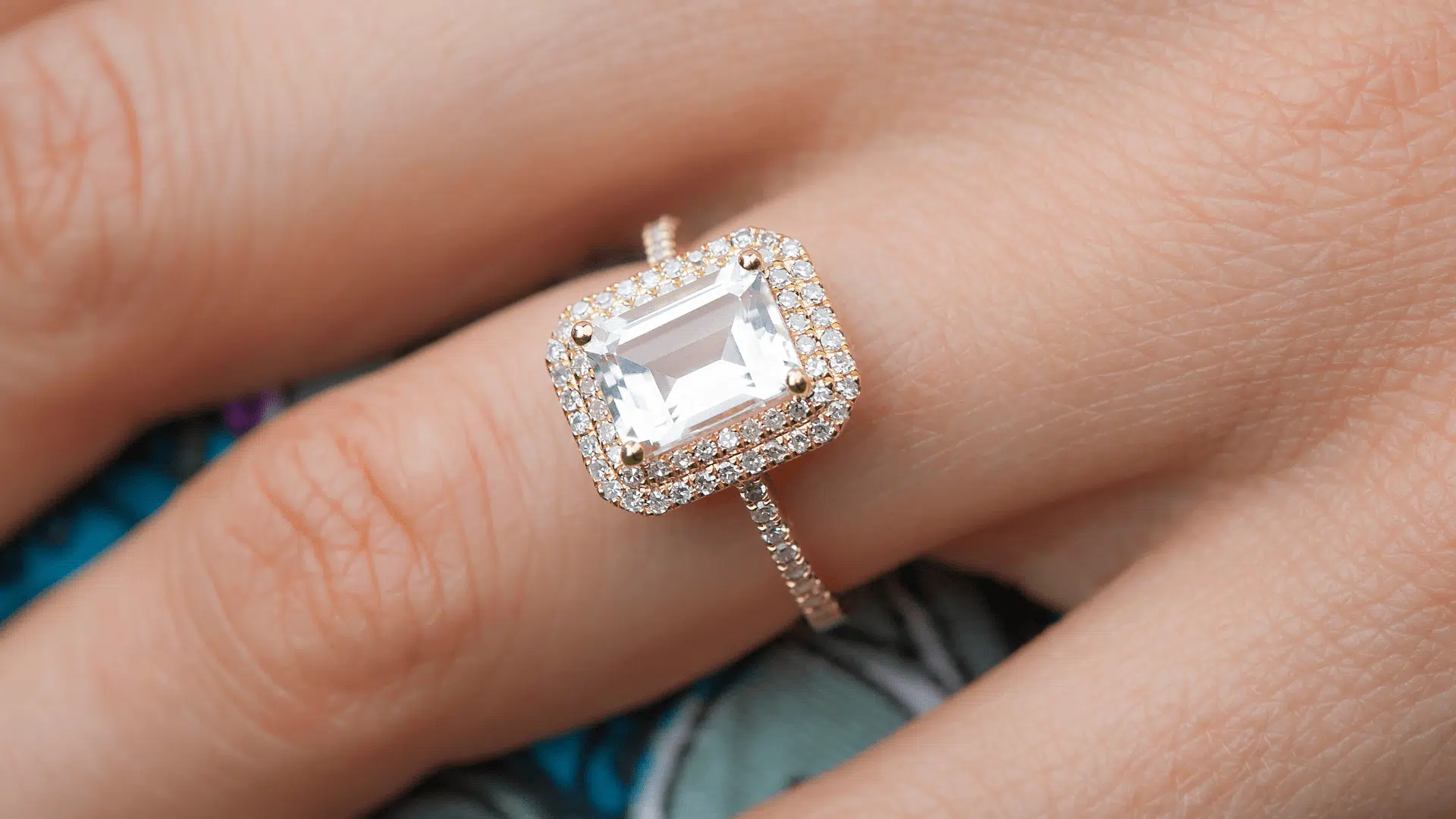
Moissanite vs diamond is a choice between two different stones. Moissanite is lab-made silicon carbide with more rainbow fire, 9.25 Mohs hardness, and a much lower price. Diamond is pure carbon, harder at 10, and graded on the 4Cs. Choose moissanite for the most size per dollar. Choose a diamond for the classic white sparkle.
Holiday proposals are close, and the first big decision is usually the center stone. Two options keep showing up side by side online: moissanite and diamond. They look alike in photos. They are not the same material, and they do not price, wear, or resell the same way.
The right pick depends on what you value. Some buyers want the biggest stone their budget allows. Others want the classic look and a graded stone to pass down. Whichever group you are in, the choice shapes your budget, the look of the ring, and how it wears for years.
Emerald Jewelers is a Salem, NH jeweler that sells diamond jewelry, so we have a stake in this question. This guide still gives you the trade-offs on both sides, including where moissanite comes out ahead.
Below, you will see how the stones compare in makeup, sparkle, hardness, price, and resale. You will also see where lab-grown diamond fits, since many shoppers weigh three options, not two. Along the way, you will get plain answers to the questions shoppers ask most, from whether moissanite gets cloudy to whether it is worth the savings.
Is Moissanite a Real Diamond?
No. Moissanite is its own gemstone. It is silicon carbide, while diamond is pure carbon. Natural moissanite is extremely rare, so the stones sold in jewelry are grown in labs.
GIA’s overview of diamond simulants places moissanite in the simulant group. A simulant looks like a diamond but differs in chemistry, crystal structure, and optical properties. That does not make it a poor stone. GIA notes that colorless moissanite has become a very popular engagement ring stone because of its brilliance, intense fire, and durability.
Lab-grown diamond is a different case. It is a real diamond with the same crystal structure and carbon makeup as a mined one. It simply formed in a machine instead of underground. How lab-grown and natural diamonds differ comes down to origin, price, and resale. So the real shopping choice often has three options, not two: moissanite, lab-grown diamond, and natural diamond.
Which Stone Sparkles More?
Moissanite throws more colored light. According to GIA, it has more than twice the fire of a diamond and slightly more brilliance. Fire means the rainbow flashes you see when a stone moves. Brilliance means white light returned to your eye.
A diamond usually reads as whiter and crisper. Moissanite reads as livelier and more colorful. Size changes the effect, too. GIA notes that in stones around one carat and up, moissanite’s intense fire can give it away as a non-diamond. In very large sizes, it can look like a disco ball.
Jewelers can also tell the stones apart under magnification. Moissanite is doubly refractive, so you see a double image of the back facets. Some moissanite also looks slightly yellow or gray at certain angles.
Neither look is better. It is a matter of taste. Photos flatten fire, so judge a diamond and a moissanite in real light before you decide.
Which Stone Holds Up Better for Everyday Wear?
Diamond is harder, but both handle daily wear. Diamond rates 10 on the Mohs scale. GIA lists moissanite at 9.25 and calls it very hard and durable, though not as hard as diamond. For most buyers, that gap is not the deciding factor.
Care matters more than the small hardness gap. Oil, lotion, and soap film dull the surface of either stone. A gentle diamond jewelry cleaner routine keeps a diamond bright, and moissanite needs the same attention. Also, have a jeweler check the prongs from time to time. A loose prong can lose any stone.
Quick Facts: Moissanite vs Diamond
- Makeup: moissanite is silicon carbide; diamond is pure carbon
- Hardness: moissanite 9.25 on the Mohs scale; diamond 10
- Fire: moissanite has more than twice the fire of diamond (GIA)
- Origin: moissanite is lab-grown; diamonds are mined or lab-grown
- Grading: diamonds are graded on the 4Cs; moissanite is generally sold by millimeter size
- Price at the same size: moissanite usually costs the least, lab-grown diamond sits in the middle, and natural diamond costs the most
- Resale: weakest for moissanite; natural diamonds also usually sell for less than the purchase price
Moissanite vs Diamond: How Do Price and Resale Compare?
Moissanite costs far less than a diamond of the same size. Lab-grown diamond sits between the two, and natural diamond costs the most. That gap is the main reason people choose moissanite. The same budget buys a larger stone.
The trade-off is resale. Moissanite has a very limited secondary market. Lab-grown diamonds also have a smaller resale market than natural ones, and even natural diamonds usually sell for less than their retail price. If you see the ring as something to wear, not sell, resale matters less.
Documentation differs, too. Diamonds are graded on the 4Cs, while moissanite is usually sold by millimeter size. Ask for a certificate of authenticity whichever stone you buy. Set your engagement ring budget before you compare stones, so the price gap does not steer you before taste does.
How to Choose Between Moissanite, Lab-Grown Diamond, and Natural Diamond
Pick the stone that matches your top priority. Here is a simple way to sort it:
- Choose moissanite if you want the largest stone for the money, you like extra rainbow fire, and you see the ring as something to wear, not resell.
- Choose a lab-grown diamond if you want a real diamond at a lower price than mined, with a classic white sparkle and an independent lab report.
- Choose a natural diamond if origin, rarity, and tradition matter most, and you accept the higher price.
Two questions help break a tie. Will the ring be worn daily for decades? Does the person wearing it prefer colorful flash or a clean white sparkle? Ask them, or notice what they already wear. Whatever you choose, plan ahead for fit. You can find the ring size at home without spoiling a surprise.
Why Seeing a Diamond in Person Still Matters
Screens shift color and flatten fire. A diamond in person shows you the benchmark, so you can judge whether you want a whiter sparkle or more rainbow flash. If you are shopping for diamonds, a local jewelry store in Salem can show you lab-grown and natural stones under real light and on your hand.
If moissanite is your pick, ask the seller for the stone’s millimeter size, its color grade, and written documentation. Then hold it against a diamond of the same size before you commit.
Make the Choice You Will Enjoy Wearing
Moissanite wins on size per dollar and fire. Diamond wins on hardness, grading, and tradition, and lab-grown diamond splits the difference. Choose the stone you will enjoy wearing every day. When you are ready to see diamonds in person, Emerald Jewelers in Salem, NH can help you compare natural and lab-grown options for your engagement ring.
FAQs
Is moissanite a real diamond?
No. Moissanite is silicon carbide, while diamond is pure carbon, so they are different gemstones. A lab-grown diamond is different. It is a real diamond with the same carbon crystal structure as a mined one.
Does moissanite look like a diamond?
At a glance, yes, but moissanite shows more rainbow fire. GIA notes that in stones around one carat and larger, the intense fire can give it away. A jeweler can also spot its double refraction under magnification.
Does moissanite get cloudy over time?
Moissanite does not cloud with age. Oil, lotion, and soap film can make it look dull, though. Regular gentle cleaning brings the sparkle back.
Is moissanite worth it for an engagement ring?
It can be, if you want the largest stone for your budget, like extra rainbow fire, and do not plan to resell the ring. A diamond fits better if you want a classic white sparkle, grading on the 4Cs, and a stronger resale market.
Which is better, moissanite or a lab-grown diamond?
Choose moissanite if price and extra fire matter most. Choose a lab-grown diamond if you want a real diamond, which rates 10 on the Mohs scale and can come with an independent lab report. Lab-grown diamonds usually cost more than moissanite.